

Table of Contents
- Why a Luxury Fragrance Candle Changes a Room
- Fragrance Notes and Scent Profiles Explained
- Non-Toxic Luxury Candles: Wax, Wicks, and What to Avoid
- Scent Technology for Mood: How Fragrance Affects How You Feel
- How to Burn Luxury Candles Properly
- Choosing the Right Luxury Fragrance Candle for Your Space
- Frequently Asked Questions
Last Updated: September 21, 2026
Why a Luxury Fragrance Candle Changes a Room
A luxury fragrance candle is a hand-poured, high-concentration candle made with premium waxes and layered fragrance notes, designed to release scent evenly rather than fading within minutes. The difference between a cheap candle and a well-made one is wax chemistry, wick design, and fragrance layering.
The Difference Between Scent and Atmosphere
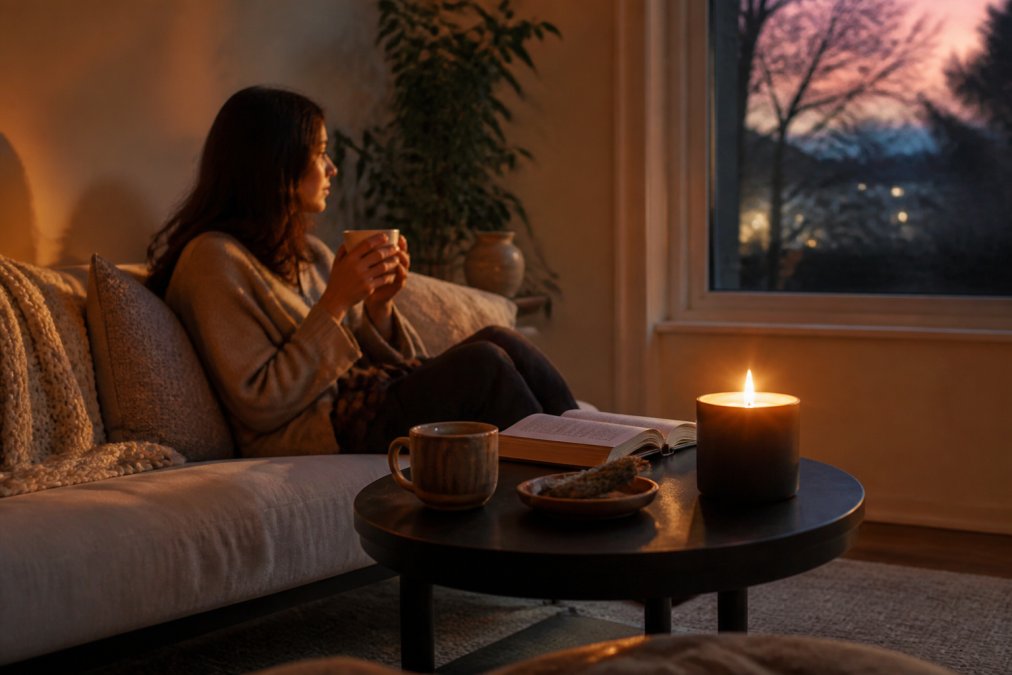
A paraffin-free candle with a well-built scent profile signals that a transition is happening: work is over, the day is closing, or a ritual is beginning. At B'alam, we build ritual candles around that idea, pairing perfumer-crafted fragrances with scent technology designed to support calm, focus, or energy.
Fragrance Notes and Scent Profiles Explained
Fragrance notes are the scent layers that unfold as a candle burns, built in three stages: top, heart, and base. Understanding them is the fastest way to predict whether a candle will suit your space.
Top, Heart, and Base Notes
- Top notes hit first, usually citrus, herbs, or light florals. They fade within the first 15 to 30 minutes.
- Heart notes emerge next and form the core character of the scent, often florals, spices, or woods.
- Base notes linger longest: resins, musk, amber, and deep woods. These define what the room smells like hours later.
A candle with only strong top notes smells impressive in the store and disappointing at home. Base notes give a luxury fragrance candle staying power.
How to Read a Scent Description
Most scent descriptions list notes in order of dominance, not chronology. "Bergamot, jasmine, sandalwood" usually means bright opening, floral middle, woody finish. Buying on the first note alone is a common mistake: if you dislike heavy base notes like musk or amber, a citrus-opening candle may still feel dense an hour in. Read the full list, not the headline.
Non-Toxic Luxury Candles: Wax, Wicks, and What to Avoid
Non-toxic luxury candles use clean-burning waxes such as soy, coconut, or a soy-coconut blend, paired with lead-free cotton wicks. But "non-toxic" is a marketing word, not a regulated one, so evaluate what goes into the wax, wick, and fragrance oil, and what comes off the top when it burns.
Soy, Coconut, and Paraffin-Free Options
Soy wax burns cooler and slower than paraffin, extending burn time, while coconut blends give a smoother wax pool and carry fragrance well. Paraffin-free is the baseline for non-toxic luxury candles. Note that "soy blend" can mean a small percentage of soy cut with paraffin, so look for explicit paraffin-free language, the label should name the wax, not hint at it.
What Actually Comes Off a Burning Candle
Every candle produces some combustion byproducts. The question is which ones and how much:
- Soot and particulate matter, fine black particles from incomplete combustion. Paraffin, long wicks, and drafts increase soot output; visible soot on a jar rim signals an inefficient burn.
- Volatile organic compounds (VOCs), carbon-based chemicals that vaporize at room temperature. Formaldehyde, benzene, and toluene have been detected in some candle emissions studies at low levels, but concentrations rise with poor ventilation and long burn times.
- Phthalates, plasticizers historically used in fragrance oils to extend scent life. Reputable luxury makers label phthalate-free fragrance; if a brand does not say so, assume it has not verified.
- Lead in wicks, banned in the United States since 2003, but imported candles occasionally still test positive. Lead-core wicks are why "lead-free wick" became a standard label claim.
How to Read a Candle Label Like a Formulator
Most labels are written by marketing, not chemistry. What to look for, in order of importance:
- Wax named specifically. "100% soy wax," "coconut-soy blend," or "beeswax" beats "vegetable wax blend" or "soy blend."
- Wick material stated. "Lead-free cotton," "cotton," or "wood" are all fine. "Metal-core" or unstated wick material is a yellow flag.
- Fragrance disclosure. "Phthalate-free" and "IFRA-compliant" are meaningful. "Proprietary fragrance blend" with no further detail is not.
- Dye and additive list. Dyes, UV inhibitors, and synthetic musks are common and not inherently dangerous, but they add to the emissions load. A clear, undyed candle is the simplest choice for sensitive spaces.
- Third-party testing. Look for brands that reference ASTM or IFRA standards, or that publish safety data sheets on request. A brand that will not share an SDS is telling you something.
Indoor Air Quality: What the Research Actually Shows
- Ventilate. A cracked window or a running exhaust fan during and after a burn dramatically reduces VOC and particulate concentration.
- Limit burn duration. Four hours is a reasonable ceiling. Longer burns concentrate emissions and overheat the vessel.
- Skip the candle in tiny, sealed rooms. Bathrooms and closets with no airflow are the worst-case scenario for any candle.
- Be cautious with asthma or chemical sensitivity. If you react to scented products generally, the issue is usually the fragrance oil, not the wax. A fragrance-free or essential-oil-only candle is the safer test.
Consumer product safety guidance on candle emissions and indoor air quality
Scent Technology for Mood: How Fragrance Affects How You Feel
Scent technology for mood is the practice of selecting and delivering fragrance to support a specific emotional or cognitive state, rather than simply making a room smell good. This is where home fragrance becomes a daily tool.
From Aromatherapy to Brainwave Response
Traditional aromatherapy has long linked certain essential oils to relaxation or alertness, and modern scent design pairs specific notes with delivery methods meant to support calm, focus, or energy. The honest version: research on scent and brainwave response is still developing, and no candle is a medical treatment. What is well established is that scent strongly influences mood and memory through the olfactory system, which connects directly to the brain's emotional centers.
How to Burn Luxury Candles Properly
Burning a luxury candle properly comes down to three habits: a full first burn, a trimmed wick, and enough time for the wax pool to reach the edge of the vessel. Get these right and a well-made candle burns evenly for its full rated life; get them wrong and you waste half the wax and scorch the fragrance.
The First Burn and Wax Pool
The first burn sets the pattern for every burn after it. Let the candle burn until the melted wax pool reaches the full width of the vessel, usually one to two hours for a standard jar. Blow it out early and you create a memory ring: the first melt establishes the diameter the wick can sustain, and if that diameter is smaller than the jar, every later burn follows the same narrow channel, leaving a ring of unburned wax.
Trimming Wicks and Avoiding Tunneling
Tunneling happens when wax burns down the center and leaves a ring of unused wax, almost always from a wick that was too long or a first burn cut short.
- Trim the wick to about 5 millimeters before each burn
- Burn for at least one hour per 2.5 centimeters of vessel diameter
- Never burn longer than four hours at a stretch
- Keep the candle away from drafts, which cause uneven burning
Troubleshooting: The Five Most Common Candle Problems
Most candle problems have a specific cause and fix:
1. Tunneling (wax ring around the edge) Cause: short first burn, wick too long, or wick too small for the vessel diameter. Fix: the foil method. Wrap aluminum foil around the top rim of the vessel, leaving a small opening in the center for heat to escape. Burn for one to two hours. The trapped heat re-melts the outer wax and levels the pool. Repeat once or twice if needed. If the candle still tunnels after two foil sessions, the wick is undersized and the candle is defective.
Extinguishing, Storage, and Vessel Care
How you put a candle out matters as much as how you burn it. Blowing it out sends soot and unburned wax particles into the air and can splatter walls. Use a wick dipper or snuffer: dip the wick into the melted wax to extinguish it, then straighten it for the next burn.
Storage rules:
- Keep the lid on. Dust and airborne oils settle into exposed wax and degrade the fragrance.
- Store away from heat and direct sunlight. UV light fades fragrance oils and can discolor wax.
- Keep the wick trimmed between uses. A pre-trimmed wick makes the next burn easier.
- Do not refrigerate. Cold wax can crack and separate from the vessel wall.
Choosing the Right Luxury Fragrance Candle for Your Space
Choosing the right luxury fragrance candle comes down to two variables: how far the scent must travel and what the moment calls for. Match scent throw to room size, then scent profile to ritual.
Scent Throw and Room Size
Scent throw is how far a candle's fragrance travels, and it splits into two types. Cold throw is the scent before lighting; hot throw is released while burning. A candle with strong cold throw and weak hot throw smells great on the shelf and disappears once lit. Small rooms need less throw; open-plan living areas need more.
Matching Scent to Ritual
The most useful way to choose is to start with the moment, not the note list.
| Ritual | Scent Direction | Best For |
|---|---|---|
| Morning focus | Citrus, mint, light herbs | Work sessions, study |
| Evening wind-down | Lavender, chamomile, soft florals | Sleep prep, reading |
| Meditation | Resins, woods, incense-style | Breathwork, mindfulness |
| Gathering | Amber, spice, warm woods | Dinners, hosting |
Frequently Asked Questions
Are luxury candles worth the price?
A luxury fragrance candle often uses higher concentrations of fragrance oils, cleaner waxes like soy or coconut, and lead-free cotton wicks. These choices can mean a stronger scent throw, a longer burn time, and fewer indoor air irritants. The price reflects materials, craftsmanship, and the time spent blending notes. If you value a specific olfactory experience and want a candle that burns evenly without tunneling, the cost can be justified. For occasional use, a luxury candle may last months.
How do I choose a non-toxic luxury candle?
Look for candles labeled paraffin-free and made with soy wax, coconut wax, or a blend. Check that the wicks are lead-free and made of cotton or wood. Avoid synthetic fragrance if you have sensitivities; instead, seek candles scented with essential oils or phthalate-free fragrance. A non-toxic luxury candle should list its ingredients clearly. Brands like B'alam share their scent technology, so you know what you are breathing. Always test a small candle first if you have respiratory concerns.
What is the best way to burn a luxury candle for even scent throw?
On the first burn, let the candle stay lit until the wax pool reaches the edge of the vessel, usually one to two hours. This prevents tunneling. Trim the wick to 1/4 inch before every burn to avoid soot and a flickering flame. Burn for no more than four hours at a time. Keep the candle away from drafts, which can cause uneven burning. Following these steps helps you get the most from your luxury fragrance candle.
Can scent technology for mood actually affect my brainwaves?
Research in aromatherapy and neuroscience suggests that certain fragrance compounds can influence brainwave activity. For example, lavender is often linked to relaxation, while citrus notes may promote alertness. B'alam blends expert perfumer-crafted fragrances with principles from Mayan healing rituals. While individual responses vary, many people find that a consistent scent ritual helps them shift into a calmer or more focused mindset. The key is to choose a scent you associate with the desired state and use it regularly.